Performing magic tricks becomes quite a different occupation when your life is on the line. No, we are not referring to so-called “death-defying acts.” Many of those have carefully-implemented failsafes, and despite the skill needed to perform them, no one will threaten to shoot you if they catch you palming a hairpin. Likewise, no one will drag a mentalist in Miami into the street if they found out that they were merely skilled at making lucky guesses. Instead, truly dangerous magic is the type that has to look like it is no magic at all.
This type of flawless performance was born in the gambling halls and casinos at the turn of the 20th century. At the time, many migrant laborers realized that their calloused hands could make them more money playing cards instead of tilling soil. Some realized that they could make even more money if they rigged the odds by cheating. Their only rule: don’t get caught.
Magic as a performance has existed for thousands of years in many cultures as a wondrous display of skill and intrigue that captivates its audiences, and as it has grown into a defined profession with many famous names, a need for international organization has arisen, and in 1922 the International Brotherhood of Magicians was formed. The organization has its origins in the correspondence between three magicians about magic in general. As it grew, more and more magicians wanted to take part in it and began to set up local sects in their own towns and cities. Now it is the largest organization of its kind in the whole world.
The International Brotherhood of Magicians exists to bring people with the common interest in and skill in magic together, and to promote everything magic with the exchange of ideas and to provide an organizational resource so that magicians may find each other and grow their trade. The “IBM” allows for people all over the world to stay connected with each other so that they may establish a professional presence globally. It is fulfilling and significant for people to know that there are people all over the world who do what they do and love it just as much, while protecting the craft.
As an international body of people of a similar trade, the IBM provides regulatory services in regards to ethics and professional standards. They have opposed the exposure of magicians’ secrets and the cruel treatment of animals for the sake of entertainment. Being part of a large body with elected officials ensures that people are being held to a certain standard, and cannot brazenly defy or damage the interests and needs of their industry without penalty. The IBM provides a long list of by-laws and rules that serve as a guide for the behavior expected from listed magicians and the goals of the organization as a whole. Magic is an art, and while one person might paint a picture or write a story, magicians use their particular skills to create a trick or illusion, and the protection of these tricks as actual pieces of art are fundamental to the interests of the organization, and a key part of this regulatory process is in the protection thereof.
On top of the regulatory benefits and solidarity in practice afforded by the IBM, packages of benefits from life insurance to healthcare, and even rental car services are provided to members. As a trade that is often self-started and self-managed, it is often difficult to guarantee personal income and the market can be uncertain, as is the nature of individual job-based entertainment services.With membership, the IBM can alleviate some of these uncertainties.
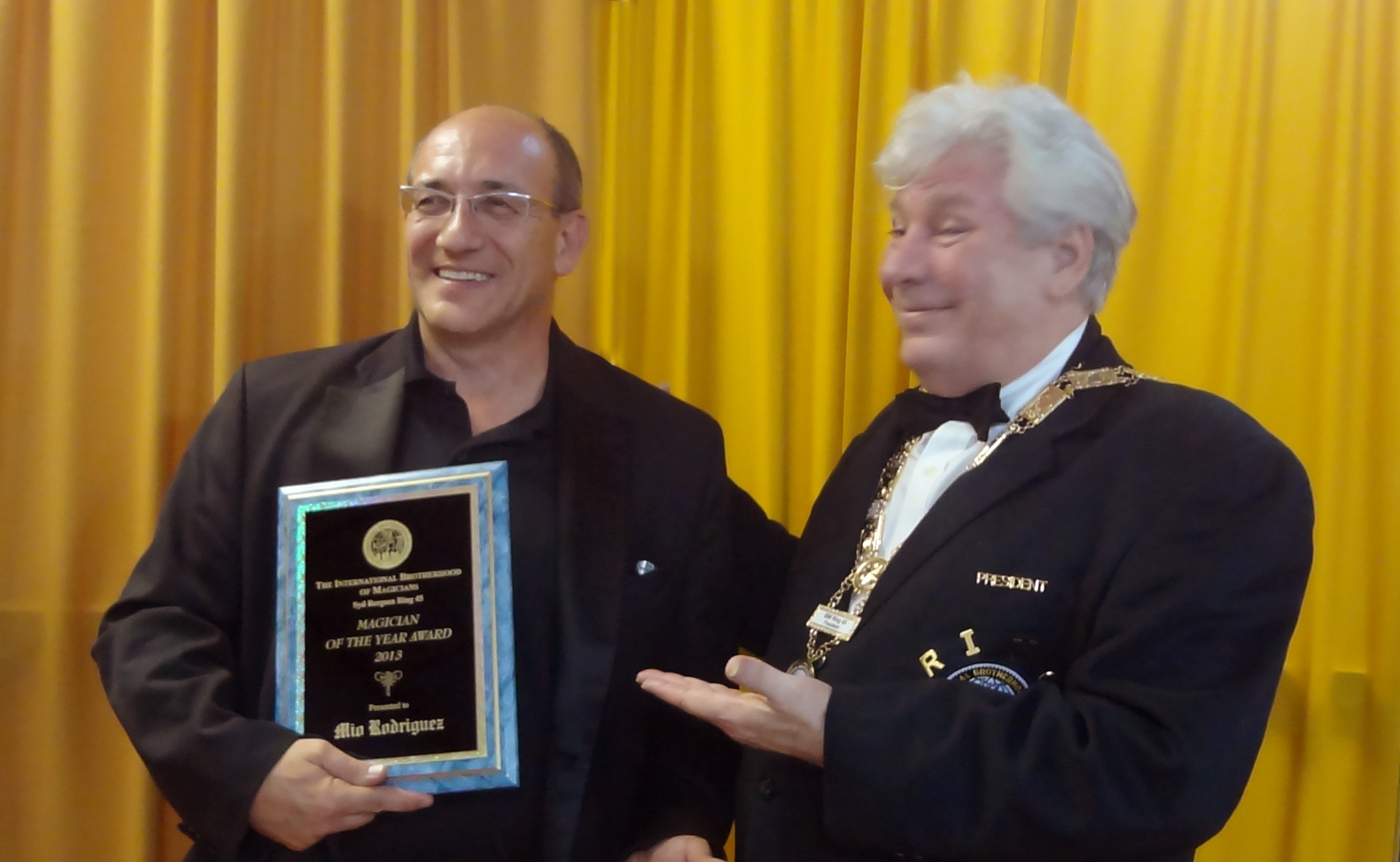
The IBM chooses a “Magician of the Year” annually for the best or greatest contributor. One such magician is Close-up Magic pioneer and Mentalist Mio, who has performed for innumerous celebrities and functions and won the 2013 “Magician of the Year” award. Performing on cruise ships to high profile birthday parties and more, Mio has made a huge name for himself within the industry. For the best in mentalism in Miami, come see one of his live shows, or visit his website.
Jay Olson is a student of psychiatry at McGill University in Montreal, but he also has an interesting side job that has come increasingly into play with his studies: performing magic tricks. As part of a paper recently published in Consciousness and Cognition, Olson conducted research that revealed how subtle environmental factors can strongly influence decisions with astounding predictability.
Like any good magician’s tricks, these cues are almost imperceptible to the human brain and rely on skillful sleight-of-hand as well as audience reading. Further research by people like Olson can help break through the hidden codes used in society, such as how advertisers influence buying behavior or politicians sway voters’ opinions. And while the techniques used by magicians will remain a secret, added transparency as to how our thoughts can be shepherded to a particular choice can help further understanding of the human brain and group communication. Continue reading →
Mentalism is an art that has not received nearly as much on-screen attention as magic. This favoritism extends to a lack of fictional characters who possess the gift of mentalism.
Part close observers, part detectives and part lucky-guessers, the traits of a mentalist certainly lend themselves to airs of drama, suspense, theatrics and even the occasional heroism. Producers and writers should definitely take more advantage of the stunning and exciting displays mentalists can elicit.
Here are some of the rare characters on television that have set the standard for mentalists and given mainstream audiences a taste of their capabilities: Continue reading →
We have already talked about how watching magic can have a positive effect on the imaginations and creative problem solving of four- to six-year-olds. A newer study shows that magic can have just as profound of an effect on an even younger crowd: babies.
A new study published in the Science academic journal revealed that even children less than a year old can appreciate magic in unexpected ways. Babies were shown simple magic tricks that defied basic concepts of motion and physics. To the surprise of the researchers, the babies were able to pick up on the unusual events and showed more intentioned curiosity when examining the objects used in the trick.
This finding shows not only that babies have already developed a small sense of universal logic even at a young age, but that defying this logic through magic heightens brain activity and a desire to learn. Continue reading →
In a 1990 TV special, Penn and Teller performed a variation on the “body separation” illusion. Throughout the performance, Penn takes apart and rearranges the boxes containing the “body segments” of his hapless mute partner Teller and scatters them throughout the stage. Teller’s body parts poke out periodically according to music cues, teasing the audience by appearing as if they are in the separate pieces.
While this trick is impressive enough on its own, Penn and Teller decide to go one step further and reveal how the trick is done. They assure the audience that the first version is how “everyone else does it,” but they prefer to do it again with clear acrylic versions of the boxes. “We got these special made,” Penn tells the audience as they begin to dissect the trick.
The question the viewer is left with is, why go through the trouble? Why would Penn and Teller break the magician’s code and prove to everyone that the illusion was indeed a fake? The answer, along with a video of the performance, lies in the rest of this post.
Penn and Teller reveal the trick for the same reason most magicians do things: showmanship.
Penn and Teller want to establish a connection with their audience and make them feel “in” on the act. Their casual dismissal of the illusion runs contrary to how much trouble the process obviously takes. Watching the video, Teller scrambles on his back to be ready for his next cue, indicating the amount of rehearsing required.
When Penn tries to brush aside the skill involved, what he is really doing is playing up the creativity and dexterity magicians need to make their illusions work. He later tells Victoria Jackson that “We do stuff like that with the clear boxes because everybody thinks they know how magic is done. People think that if they think enough, they can just figure it out on their own.”
Trade Secrets
The truth is that the secret behind the tricks is often far more complex than the audience can realize. While they are trying to process the apparent nonsense going on in front of them, the performers are scrambling behind the scenes to make their cues and achieve the look of effortlessness.
In the end, Penn and Teller are simply adding to the mythos that magic creates. Besides, they are fairly tight-lipped about how their other tricks work. They once sued a magician who threatened to reveal one of their secrets, and they included an unexpected ending to another trick reveal as a knowing wink to the audience.
They want to assure audiences not that magic is “fake,” but that the real skill involved in close up magic in Miami comes from making it all seem easy. Visit our videos page to see more performances and try and guess how they were done.
Outstanding in every way. When you have a bunch of law enforcement officials including FBI, DEA, chiefs of police, and others watching intently and they can’t figure it out that is pretty amazing magic. It was really a fun experience and has people still talking about it. MIO thanks.
Chief Phil Cotten
Executive Director
Oklahoma Association Of Chiefs of Police
Team-building has become a staple for many companies, small and large. The purpose? Bring your team closer together, allow them to work better with one another but also express their individuality, build on communication skills, think outside the box, improve morale, you name it. The benefits are well known and generally agreed upon, when done well, of course. And that’s the harder part, since there are so many programs, workshops, events, activities to choose from.
The International Brotherhood of Magicians, Ring 45, has named Miami resident and professional magician, Mio Rodriguez, of Magic By Mio, Inc., as 2013 Magician of the Year! The presentation was made February 6th in South Miami by both 2013 President Rick Del Vecchio and 2014 President Roy Allen Fischer.
Mio, born into a theatrical family in New York, is a graduate of Binghamton University and launched his career as professional magician in 1990. He has travelled the world, giving people a sense of wonderment and is at ease entertaining at family celebrations, facilitating corporate team building presentations, as well as filling theatres with his charismatic presentation of magic and mentalism! Celebrities too have raved about his performances, most recently Barbara Streisand, Robert De Niro and LeBron James and Pat Riley of The Heat!
If you are interested in hosting a Close Up Magician for your next event, please feel free to contact Magic By Mio anytime.






 Team-building has become a staple for many companies, small and large. The purpose? Bring your team closer together, allow them to work better with one another but also express their individuality, build on communication skills, think outside the box, improve morale, you name it. The benefits are well known and generally agreed upon, when done well, of course. And that’s the harder part, since there are so many programs, workshops, events, activities to choose from.